
Blog
Custom Sportswear Manufacturing: From Design to Final Production

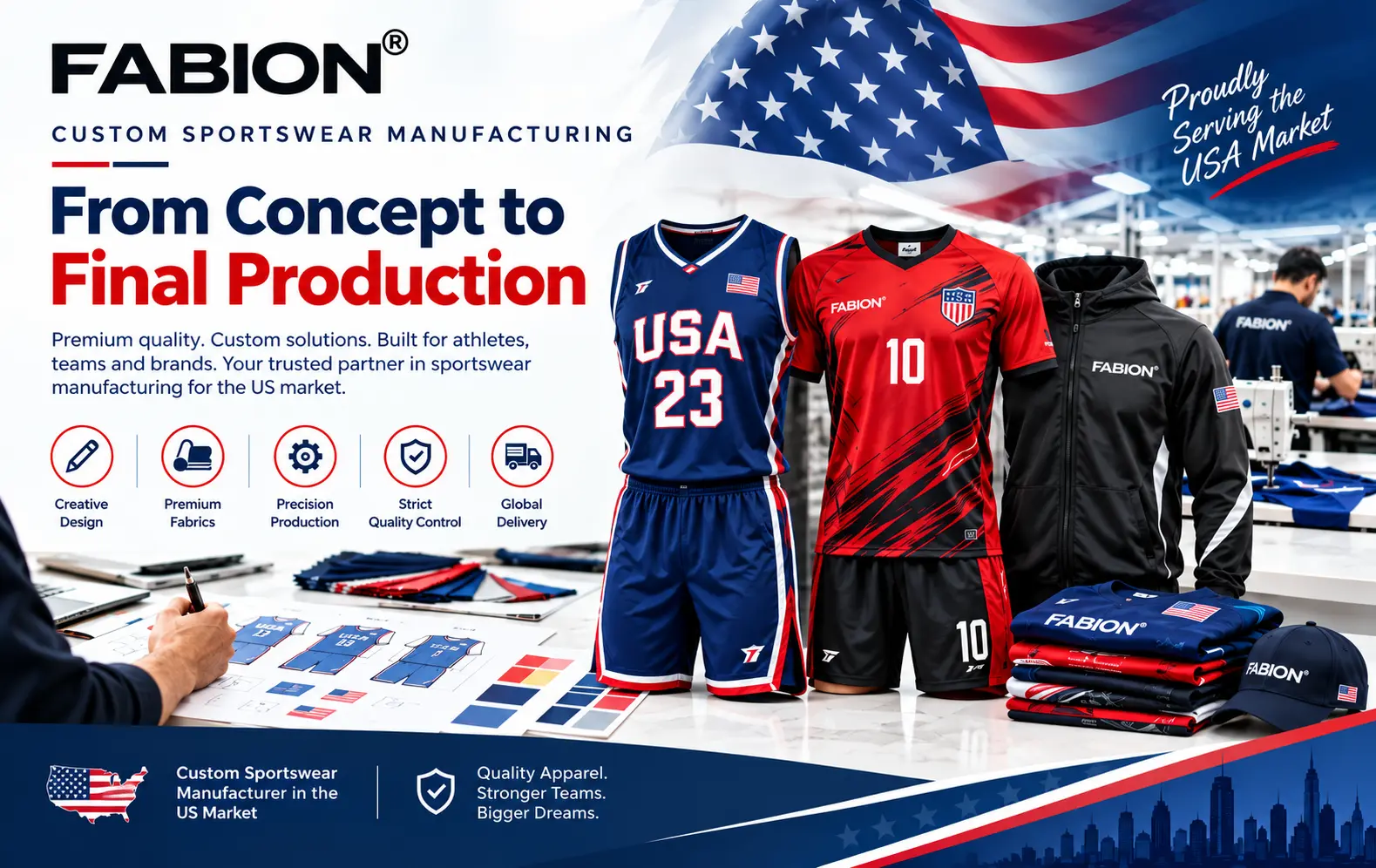
Custom sportswear has become an important part of modern team identity. From local clubs and school teams to professional athletic organizations and growing sports brands, people want apparel that looks professional, feels comfortable, and performs well during demanding activities. A well designed uniform does more than create a consistent appearance. It can help athletes feel confident, represent their team, and stay comfortable throughout training and competition.
Behind every quality custom uniform is a carefully managed manufacturing process. The journey begins with an idea and continues through design development, fabric selection, customization, production, quality inspection, and final delivery. Understanding this process helps teams, organizations, retailers, and sports brands make better decisions when ordering custom apparel.
For businesses and athletic organizations serving the United States, working with an experiencedcustom sportswear manufacturercan make the production process more organized and predictable. The right manufacturing partner can turn a creative concept into practical sportswear while maintaining attention to fit, fabric, customization, and production consistency.
What Is Custom Sportswear Manufacturing?
Custom sportswear manufacturing involves creating athletic apparel according to specific requirements rather than producing standard designs for general retail use. Customers can select colors, patterns, logos, names, numbers, materials, sizing, and other design elements based on their needs.
The process can cover a wide range of products, including team uniforms, training apparel, competition clothing, warm up garments, athletic sets, and other performance focused products.
Unlike ordinary clothing production, sportswear requires careful attention to movement and comfort. Athletes may run, jump, stretch, slide, or compete for extended periods. Because of this, manufacturers need to consider how fabrics behave during physical activity and how the final garment fits the wearer.
A professional production process usually considers:
- Fabric selection and performance
- Garment construction
- Size and fit requirements
- Team colors and visual identity
- Logos, names, and numbers
- Printing or embroidery requirements
- Stitching and finishing
- Quality inspection
- Packaging and delivery
Each stage contributes to the final product, which is why proper planning matters from the beginning.
Step 1: Understanding the Customer’s Requirements
Every successful sportswear project starts with communication. Before production begins, the manufacturer needs to understand what the customer actually wants.
A sports team may already have a complete design, while a growing brand may need assistance developing its apparel concept. Some customers may provide only a logo and color palette and expect the manufacturer to help turn those ideas into finished garments.
At this stage, important details include product type, intended use, quantity, colors, sizes, customization requirements, fabric preferences, and delivery expectations.
For example, a youth soccer club may needlightweight sports uniformswith player names and numbers, while a fitness brand may require a broader collection designed for repeated training sessions.
Clear communication at the beginning can reduce mistakes later in the process.
Step 2: Turning an Idea Into a Sportswear Design
Once the requirements are clear, the design process begins. This stage transforms an idea into a practical garment concept.
Designers consider the overall appearance of the apparel while also thinking about how the garment will work during physical activity. Colors, patterns, logos, placement, neckline styles, sleeve designs, and other details need to work together.
A good design should not simply look attractive on a screen. It should also translate effectively into an actual garment.
For team apparel, visual consistency is especially important. A coordinated design can create a recognizable identity across players, coaches, and staff.
The design stage may include:
- Initial design concepts
- Color selection
- Logo placement
- Name and number positioning
- Size specifications
- Artwork preparation
- Design approval
Customers should review the design carefully before production because even small changes can become more difficult once manufacturing has started.
Step 3: Selecting the Right Fabric
Fabric selection plays a major role in sportswear performance. Different activities place different demands on clothing, so one material may not suit every product.
Sportswear fabrics often need to balance comfort, durability, breathability, flexibility, and moisture management. The right choice depends on the intended use of the garment.
For example, apparel designed for intense training may require a lightweight and breathable material, while outer layers may need greater protection and structure.
An experiencedsports uniforms manufacturercan help customers understand which fabric characteristics are suitable for their products.
Important considerations include:
- Weight and thickness
- Breathability
- Stretch and flexibility
- Durability
- Comfort against the skin
- Moisture management
- Color performance
- Care requirements
The goal is to create sportswear that feels comfortable while supporting the athlete’s movement.
Step 4: Sampling Before Full Production
A sample provides an opportunity to evaluate the design before manufacturing a larger order.
Instead of moving immediately into full production, manufacturers can create a sample that represents the proposed final product. Customers can then review the appearance, sizing, fabric, customization, and construction.
Sampling is particularly useful for businesses ordering custom apparel for the first time. It provides a physical reference that can reveal details that may not be obvious in digital artwork.
During sample review, customers should check:
- Overall appearance
- Fabric feel
- Fit and measurements
- Logo placement
- Color accuracy
- Printing quality
- Stitching
- Names and numbers
- General comfort
If adjustments are necessary, they can be discussed before the larger production run begins.
Step 5: Customization and Personalization
Customization is one of the main reasons teams and brands choose custom sportswear. It allows apparel to represent a specific organization rather than looking like generic athletic clothing.
Customization can include team logos, player names, numbers, colors, patterns, sponsor details, and other approved artwork.
Modern production techniques allow manufacturers to create detailed designs while maintaining a professional appearance. The selected customization method depends on the fabric, design, quantity, and intended use.
For team uniforms, accurate placement matters. A logo that appears too high, too low, or out of alignment can affect the overall appearance of the uniform. Consistency across an entire order is therefore an important part of quality control.
Step 6: Preparing for Full Production
After the customer approves the design and sample, the project can move into production planning.
The manufacturer organizes materials, production specifications, artwork, size information, quantities, and customization details. This stage requires careful coordination because multiple elements need to come together correctly.
Production planning becomes especially important for larger orders. A small mistake in sizing or artwork can affect many garments if it goes unnoticed.
A structured manufacturing workflow helps keep production organized and reduces unnecessary delays.
Step 7: Cutting and Garment Construction
Once materials are ready, production moves into garment construction.Fabric is prepared and cut according to approved measurements and patterns. Different sections are then assembled to create the final garment.
At this stage, accuracy matters. Poor cutting can affect sizing, while inconsistent stitching can influence both appearance and durability.
Manufacturers need to pay attention to areas that experience frequent movement and stress. Seams, collars, sleeves, waistbands, and other construction points should receive appropriate attention.
The goal is to create apparel that can handle regular athletic use while maintaining its intended shape and appearance.
Step 8: Printing, Embroidery, and Finishing
Customization can take place at different stages depending on the manufacturing method and product requirements.
Printing can add detailed graphics, team identities, numbers, and other visual elements. Embroidery can provide a more textured finish for suitable garments and applications.
Finishing also includes checking loose threads, inspecting seams, cleaning the garment, and preparing it for final quality inspection.Small finishing details can
Frequently Ask Questions (FAQs)
1. What is custom sportswear manufacturing?
It is the process of producing sports apparel with customized designs, colors, logos, names, numbers, and sizes.
2. What types of sportswear can be customized?
Manufacturers can produce soccer, basketball, baseball, volleyball, rugby, training, gym, and other athletic apparel.
3. What fabrics are used for custom sportswear?
Common options include polyester and performance blends offering comfort, breathability, flexibility, and durability.
4. Can I add team logos, names, and numbers?
Yes. Custom sportswear can include team logos, player names, numbers, colors, patterns, and sponsor details.
5. Why is a sample important?
A sample lets you check the design, fabric, fit, colors, customization, and construction before full production.
6. How is sportswear quality checked?
Manufacturers inspect fabric, sizing, stitching, colors, printing, logos, names, numbers, and overall construction.
7. How long does custom sportswear production take?
Production time depends on the product, order quantity, customization, sampling, and manufacturing requirements.
8. What should US buyers look for in a sportswear manufacturer?
Consider manufacturing experience, fabric options, customization, quality control, communication, consistency, and shipping capabilities.
9. Can manufacturers produce sportswear for athletic brands?
Yes. Manufacturers can create customized collections based on a brand’s designs, specifications, and production requirements.
10. How can I order custom sportswear from Fabion Apparels?
Share your design, product type, colors, logo, sizes, quantity, and customization requirements to discuss your order.
