
Blog
How Sportswear Manufacturers Support Growing Athletic Brands

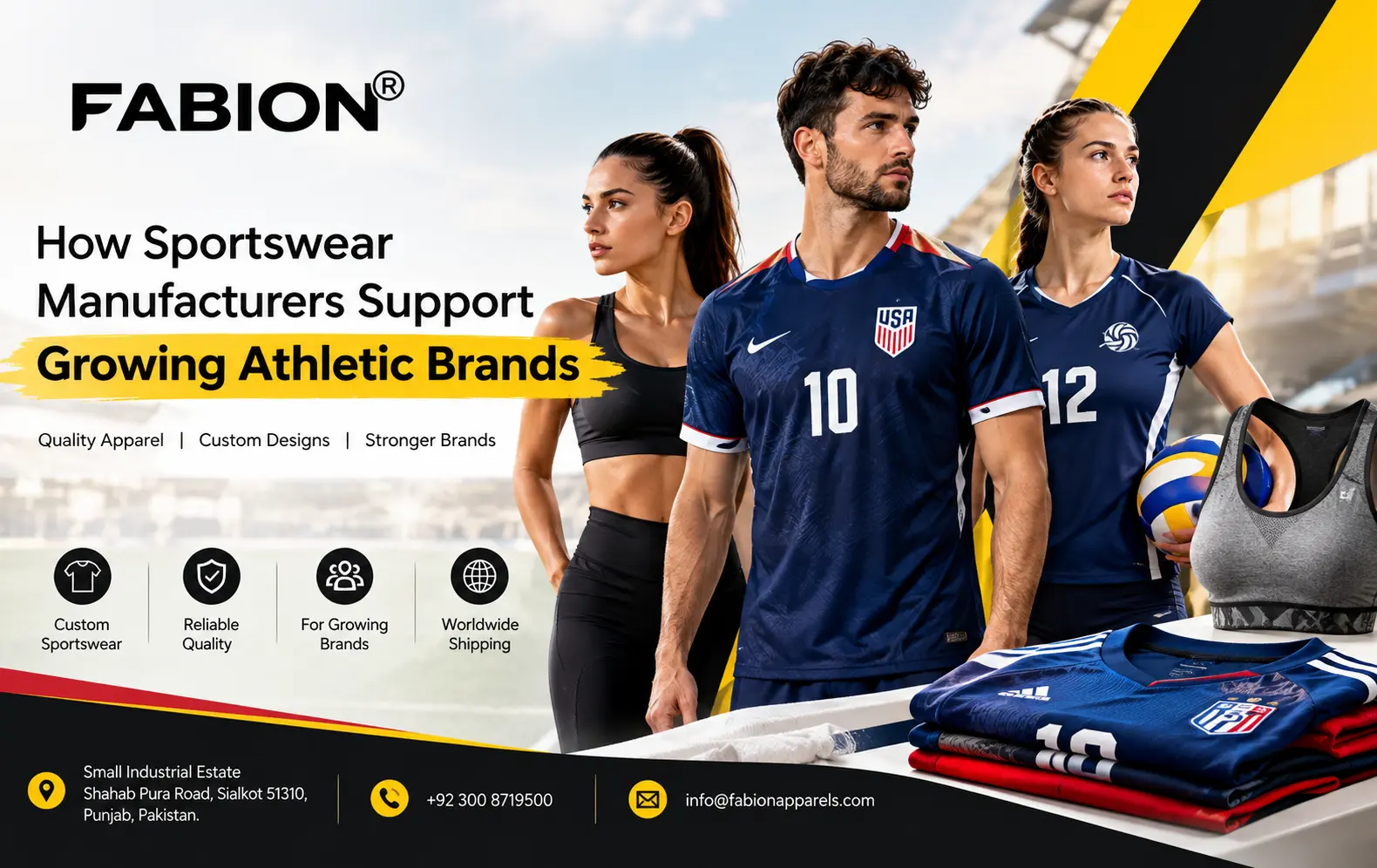
The development of an athletic brand across the United States takes more than designing attractive clothes. Companies that grow need products wearers love as well as reliable production, constant quality, a flexible approach to customization and an efficient supply chain that is able to keep up with the changing needs. This is where a reliable manufacturing supplier can make a huge impact.
For brands that are emerging in the field of athletics Working with a custom sportswear manufacturer can give access to production capabilities that are specialized without the need for the company to construct and run their own production facility. From the initial development of products and the selection of fabrics to customizing and bulk production manufacturers are able to support a variety of phases within the manufacturing process.
The relationships are especially important when a company is transitioning from small collections towards bigger orders. In lieu of having to oversee each production aspect internal to the company, owners of brands should focus their attention on marketing, design relationships with customers, as well as the growth of their business.
Why Manufacturing Support Matters for Growing Athletic Brands
A rapidly growing brand of athletics is often faced with a difficult change. Small orders can be easy to manage, however growing demand brings new challenges. Production schedules are becoming more important and quality has to be maintained and clients expect that products will be delivered in time.
An industrial partner could assist to organize the production process. Professionally trained manufacturers understand the process by which sportswear is created and manufactured which allows brands to make a better informed decision prior to putting together larger orders.
Support for manufacturing may help companies in:
- Customization and development of products
- Material and fabric selection
- Fit and size factors
- Production plan
- Branding and visual information
- Quality Control
- Management of bulk orders
- Preparing and packing for delivery
This is a growing need as an athletic company expands more products and provides customers in diverse regions in the United States.
Turning an Athletic Brand Idea Into a Real Product
A lot of successful clothing businesses start from an initial concept. A business owner may have a specific design or color combination, team concept or a particular feature of the product in your head. The process of turning that idea into a wearable product is a process that requires manufacturing expertise.
A skilled manufacturer can transform an idea into a ready-to-wear garment. This could involve taking measurements, discussing the materials, deciding on appropriate methods of construction, and deciding the best way to apply logos or graphics. be used.
For instance, a brand creating team apparel might want an exclusive jersey design that is representative of its brand. The manufacturer can assist in determining what design will fit with the chosen fabric and stitching, printing and size specifications.
This method can eliminate the need for production errors and allow the brand to move from an idea to a final product with more confidence.
Supporting Product Diversity as Brands Grow
The growing brands of the athletic world are rarely solely focused on one item for long. When customers are happy with the initial line, the brands typically expand into new clothing categories.
A company with the right manufacturing capabilities could help in this expansion. Instead of sourcing a different supplier for each product, a company might be able to produce multiple related products with one manufacturing partnership.
As an example, an expanding sports clothing collection might consist ofsoccer jerseysfor organizations and clubs, volleyball clothing for teams, and performance-oriented products for women’s fitness.
This kind of variety in product lets brands meet diverse customer requirements while maintaining the same aesthetic image throughout their collections.
Helping Brands Develop Team-Focused Apparel
Team sports are a significant segment of the American market for athletic apparel. Clubs, schools, recreational associations, academies and teams that compete all require clothing that has function and a recognizable teams’ identity.
Manufacturers can help brands by customizing clothing items that can accommodate team colors, names or numbers, logos and other elements of design.
Soccer is a great illustration. Brands can create products based on professional team uniforms while also establishing its own design guidelines. The fascination with products like jerseys from theUnited States men’s national soccer team jerseyillustrates the way team identity and design can affect the consumer’s interest in soccer clothing.
For companies that sell products that are focused on teams, manufacturing flexibility makes it simpler to provide various designs to different companies without compromising quality.
Creating Volleyball Apparel for Different Teams
Brands that represent volleyball also require apparel that allows for active movements while maintaining a neat and identifiable appearance. A well-designed volleyball jerseyis essential for players to wear during training and during competition, and blend seamlessly with the team’s overall brand.
Manufacturers can assist brands in determining important aspects like fabric construction, sizing the fabric’s behavior, printing and even finishing.
As a company expands, it will need to create various designs for clubs, schools training programs, and recreational teams. An organized manufacturing process will help you deal with these changes more effectively.
The ability to make football jerseys with a variety of sizes, colors and styles can give brands more flexibility in responding to demands of the customer.
Supporting Women’s Athletic Apparel
Sportswear for women demands careful focus on fitting, comfort, support and mobility. The products must be designed to be designed with the purpose of the activity with the user in mind, rather than simply reworking men’s clothing designs.
For women’s sportswear brands that are creating collection, the manufacturers are able to assist with specifications for the product and construction particulars. For instance, asports bralike a sports bra requires a balance between support and comfort while allowing for natural movement in exercise.
Female athletes’ brands may also require specific products as bras designed specifically forwomen’s sports braaccording to their selection and the purpose for which they are intended.
Manufacturing discussions can include aspects like the size of the product, its construction, characteristics and straps, elastic components and the finalization. These factors will have an effect on how the customer experiences the final product.
Maintaining Consistent Quality as Orders Increase
One of the greatest challenges for an athletic brand growing is ensuring consistency in the product.
When a customer purchases an item from a collection is likely to expect the next products of the same brand to conform to the same standards. Variations in the size, stitching or printing can impact the customer’s confidence.
Manufacturers play a crucial function by creating reproducible production procedures. A consistent specification can help ensure that the products are in line with the approved production samples and specifications.
Quality checks may focus on certain areas like
- The sewing process and construction of garments
- Measurements and size
- Logo placement and printing
- Fabric in good condition
- Color consistency
- Finishing details
- Overall appearance
The importance of consistency in quality is especially important for companies that wish to develop long-term relationships with retailers, teams distributors, as well as individuals who are customers.
Making Customization More Practical
The ability to customize has become a key aspect of modern sportswear. Teams and organizations typically want clothes that reflect their individuality instead of generic styles.
For companies that are growing, offering customized options can lead to additional possibilities However, it can also add manufacturing complexity. Every order could have different colors, images or names, numbers or even sizing specifications.
A seasoned manufacturer can assist to organize these specifications in a way that the customized orders are manageable.
For instance, a group collection could utilize the same design, but change the team’s logo, player details colors and various other visible elements. A well-organized production process could aid manufacturers to handle these changes while preserving the original design.
The result is that brands can provide customers a more personal experience, without having to control every aspect of production.
Helping Brands Manage Growing Order Volumes
Production requirements may change rapidly when a brand that is athletic is more well-known. The product which was initially sold in small quantities could end up requiring significantly bigger production run.
Manufacturers can aid in this development by helping companies plan their production in line with the requirements of orders and deadlines.
Communication is crucial at this point. Brands must provide precise specifications, approved samples sizes, information on size artwork, production plans prior to the start of manufacturing.
A well-organized approach can lessen confusion and enhance coordination between the production team.
For American companies working with international manufacturers, communicating is crucial because production and delivery can be a multi-step process. Documentation that is clear can aid in the process of making it easier to manage.
Helping Brands Balance Design and Practical Performance
Athletic clothing should appear appealing, but that is just one aspect of the overall experience. Athletes also value the comfort of their movements, durability and suitability to their sport.
Manufacturers can share the practical knowledge of production that can help companies to manage these priorities.
A fashion item that is visually appealing may not be effective if its structure is not appropriate for the purpose for which it was designed. A similarly useful product could fail commercially if the design doesn’t resonate with the intended audience.
The most effective process for developing products is one that considers both sides.
Brands are able to discuss their plans for market, their activity, anticipated usage, and design goals in conjunction with manufacturers. This provides the opportunity to design products that appeal to the market and still suitable for sports use.
Supporting Brand Identity Through Apparel
Sportswear can be an integral part of a brand’s image. The colors, logos, patterns, colors silhouettes, as well as product specifics can aid customers in recognizing an item.
Manufacturers are a part of this image by transforming approved designs into tangible products that are consistent in their execution.
If a brand follows the same aesthetic standards across multiple products, consumers are more likely to recognize the range. This is particularly helpful when expanding from a single product segment to several.
For instance, a brand might establish a distinct style and design for soccer items and then incorporate selected design elements to volleyball or women’s sportswear.
Consistency in manufacturing ensures that these products are able to feel a sense of connection regardless of their sports.
Improving Scalability Without Building an In-House Factory
The creation of a manufacturing facility that is independent will require significant investments. Businesses should consider the production personnel, machinery and facilities, as well as materials maintaining, quality assurance and the management of operations.
For a lot of growing brands in the field of athletics the investment might not be appropriate in the beginning phases of expansion.
A partnership with a trusted manufacturing partner gives access to manufacturing capabilities without the requirement for the company to own its own manufacturing facility.
This can enable owners of businesses to dedicate more resources to areas like
- Research on products
- Brand development
- Customer service
- Marketing via digital
- Retail relationships
- Market expansion
As the company grows as it expands, the manufacturer is as a part of the overall production plan.
What Growing Brands Should Look for in a Manufacturer
Selecting a manufacturer involves more than just the simple task of comparing prices. A lower production cost might not be worthwhile when communication, quality or reliability causes issues later.
Brands that are growing should assess the capabilities of their suppliers to comprehend the requirements of their products and to ensure their growth.
Considerations to be important include:
- Experience with the production of athletic clothing
- Customization capabilities
- Product development support
- Consistent quality standards
- Communication that is clear
- Production capacity
- Order flexibility
- Attention to specifics
- Able to meet agreed-upon timelines
Brands must be able to communicate clearly their expectations before establishing a long-term business relationship.
A successful manufacturing partnership must be viewed as a business relationship instead of the result of a transaction.
Why Long-Term Manufacturing Relationships Matter
The brands that are athletic often enhance their products with time. The feedback of customers can lead to adjustments in the size, materials as well as colors, construction or even design.
A long-term partnership with a manufacturer could help these improvements to be easier to make because the company is familiar with the products of the brand and their expectations.
This experience can help facilitate the smoother flow of communication as well as more reliable production.
For an expanding American sporting brand having a manufacturing partner who understands its standards for products can aid future collections in the process of create.
Instead of beginning from scratch with every new product the brand can build upon prior production experience.
The Role of Manufacturers in Sustainable Brand Growth
Sustainable growth isn’t just about boosting sales. It is also about establishing solid systems that will be able to support the business when demand rises.
Manufacturing is just one of these methods.
Brands must understand their requirements for production, manage inventory with care, ensure the quality of their products and avoid inconvenient operational problems.
A reputable manufacturer can contribute in this way by assisting brands design production to meet the actual needs.
A better plan can help avoid production problems and allow businesses to make better decisions about their future collections.
For brands that are growing such operational stability is just as crucial as launching new products.
How to Build a Strong Manufacturer Partnership
The relationship between a brand of athletics and its manufacturer is best when both parties communicate clearly.
Brands must provide complete information on their products and inform customers of expectations as soon as they can. Manufacturers, on the other hand, should offer practical feedback whenever an item’s design or production requirements requires adjustments.
A successful working process typically comprises:
- Sharing the original product concept
- Talking about construction and materials
- Examining measurements and size
- Approved samples
- Confirming customization details
- Establishing production requirements
- Conducting quality checks
- Coordinating final delivery
This gives both sides more clarity on what is required to be created.
Final Thoughts
The manufacturers of sportswear be a significant factor in helping athletes transition from small businesses into established companies. Their role goes beyond just producing clothes. A reliable manufacturing partner can assist in product development, customizing and quality control as well as order management and the expansion of collections.
For brands that are growing within and around the United States, this support will help build a solid base for long-term growth. If a company is creating team clothing and volleyball gear, or expanding into volleyball items or developing soccer collections or launching women’s sports products, an organized manufacturing relationship can help manage growth.
The most effective relationships are built on the ability to communicate, consistency, know-how, and a belief in the quality of the product. When these components are in sync manufacturers can be an integral part of an athletic company’s path from its beginnings to becoming a well-known and growing brand name on the market.
Frequently Asked Questions
What can a manufacturer of sportswear do to grow brands?
A manufacturer of sportswear can assist with design, development, production and quality control, sizing and order management, helping companies expand their apparel business.
Why should an athletic company collaborate with a custom-made manufacturer?
A custom manufacturer may assist brands in creating products that meet their specifications specs, specifications, colors specifications for sizing, as well as branding requirements, without having their own manufacturing facility.
Are manufacturers able to support small and growing brands in the field of athletics?
Yes. Based on the capabilities of the manufacturer and requirements for orders, expanding brands can collaborate with their production partners to create new collections and expand the volume of orders.
What factors should companies be looking at when selecting which manufacturer to choose?
Brands must assess the quality of their product, the ability to customize it, the production capacity, communication, the quality of their experience, consistency and the capacity of the manufacturer to accommodate future growth.
How can manufacturing aid an athletic company expand its product line?
Manufacturers can help brands create and create different categories of clothing while ensuring consistent designs, quality standards size, and customizing across collections.
